How Floors and Crawl Spaces Lose Heat in Canadian Winters
In a home with a basement or crawl space, the floor assembly separates conditioned living space from an area that may be semi-conditioned, unheated, or directly exposed to outdoor temperatures. In crawl spaces — shallow unfinished foundations common in older Canadian homes — temperatures can drop significantly during winter, particularly if the space is uninsulated and vented to the exterior.
An uninsulated floor above a cold crawl space loses heat continuously to the space below and transfers cold upward into the living area, causing cold floors and elevated heating demand. More critically, in vented crawl spaces, warm humid air from the living area can move downward through gaps in the floor, reaching cold surfaces in the crawl space and condensing — a process that promotes mould, wood rot, and eventually structural damage to floor joists and beams.
Freeze-Thaw Cycles and Their Effects on Foundation Areas
In Canadian climates, the ground freezes to varying depths each winter — from less than a metre in southern Ontario to several metres in the Prairies and Northern Canada. Around the foundation perimeter, repeated cycles of freezing and thawing can cause soil movement, foundation wall cracking, and displacement of drainage materials if the thermal envelope is not managed properly.
A crawl space that cycles between freezing and above-freezing temperatures is particularly problematic. Water trapped in concrete or masonry expands when it freezes, widening existing cracks and accelerating deterioration over time. Adding insulation to control temperature in the crawl space reduces the frequency of these thermal cycles and helps keep the foundation at a more stable temperature.

Two Approaches to Crawl Space Conditioning
There are two fundamentally different approaches to managing a crawl space in a cold climate, and the choice between them determines where insulation is placed:
1. Vented Crawl Space with Floor Insulation
In this approach, the crawl space is vented to the exterior as required by older building codes, and the floor above the space is insulated. Insulation is installed between the floor joists — either fibreglass batts, mineral wool batts, or spray foam applied to the underside of the subfloor.
This approach keeps the crawl space outside the thermal envelope of the house. It requires:
- Adequate ventilation area (typically 1 sq ft of vent per 150 sq ft of crawl space floor area)
- Vapour barrier on the ground surface (6-mil poly minimum, sealed to foundation walls)
- Insulation installed snugly against the subfloor without gaps
- Protection of any plumbing in the crawl space from freezing
The limitation of this approach is that pipes, ducts, and mechanical equipment in the crawl space are in an unconditioned zone, making them vulnerable to freezing and reducing efficiency for forced-air systems.
2. Unvented Crawl Space with Wall Insulation
In this approach, the crawl space is brought inside the thermal envelope by sealing vents and insulating the crawl space walls and rim joist instead of the floor above. This method is recommended in updated building codes for most Canadian climate zones, as it protects all services in the crawl space and reduces moisture-related problems.
Key elements include:
- Rigid foam board or spray foam applied to the interior of the foundation walls
- Sealed, vapour-impermeable ground cover (poly sheeting, lapped and taped)
- Rim joist insulation using spray foam or cut-and-cobble rigid foam sealed with acoustic sealant
- Controlled ventilation to the conditioned space above (typically via small supply/return registers) or a dedicated dehumidifier
Insulation Materials for Floor Assemblies
| Material | Location | R-Value / Inch | Notes |
|---|---|---|---|
| Fibreglass batts | Between floor joists | R-3.2 to R-4.0 | Must be held firmly against subfloor; prone to falling |
| Mineral wool batts | Between floor joists | R-3.7 to R-4.2 | Non-combustible, moisture-tolerant |
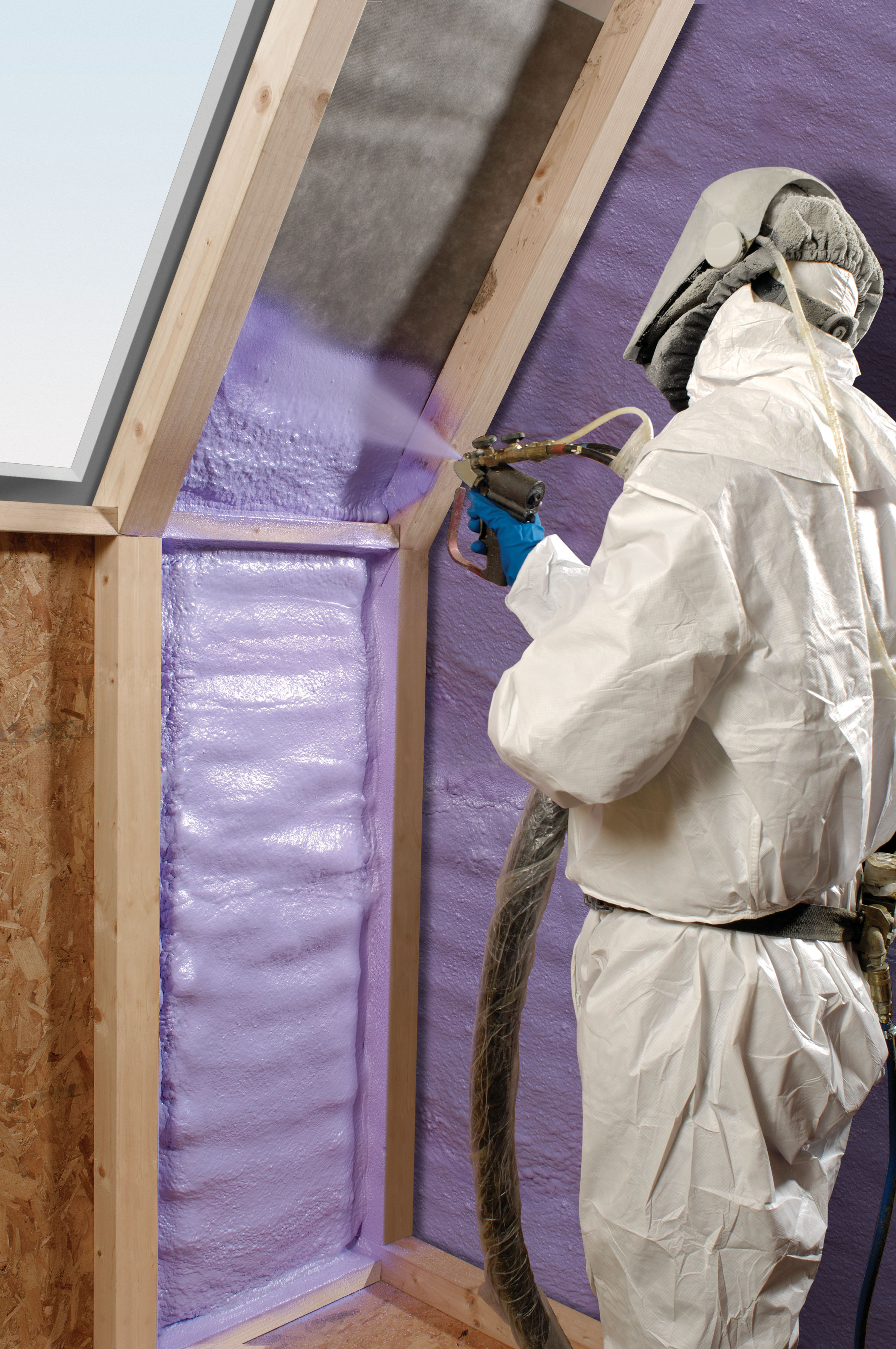
| Closed-cell SPF | Underside of subfloor or foundation walls | R-6.0 to R-7.0 | Air sealing, vapour control, adheres in place |
| Rigid EPS board | Crawl space walls | R-3.6 to R-4.0 | Moisture-tolerant; must be protected from ignition |
| Rigid XPS board | Crawl space walls, slab perimeter | R-5.0 | Low permeance; suitable for below-grade use |
Rim Joist Insulation
The rim joist — the outer perimeter joist at the top of the foundation wall — is one of the most significant sources of air leakage and heat loss at the base of a Canadian home. The rim joist is exposed to outdoor temperatures on the exterior and directly connected to the floor framing above, which conducts cold throughout the floor assembly.
Rigid foam cut to fit each joist bay and sealed with acoustic sealant or spray foam (the "cut-and-cobble" technique) is a common retrofit approach. For new construction or deep energy retrofits, spray foam applied in a continuous layer across the entire rim joist area provides both insulation and complete air sealing. A minimum of 50mm (2 inches) of ccSPF on the rim joist is typically recommended in cold Canadian climates.
Moisture Control in Crawl Spaces
Ground moisture is a persistent issue in crawl spaces. Soil releases water vapour continuously, and without a vapour barrier, that moisture enters the crawl space air, condenses on cold surfaces, and accumulates in wood framing. The NRCan insulation guide recommends a minimum 6-mil polyethylene ground cover in all crawl spaces, lapped at least 300mm at joints and sealed to the foundation walls.
In humid regions or where the water table is seasonally high, a sump pit with a pump may be needed to manage liquid water in addition to vapour barriers. An unvented crawl space with a ground cover and foundation wall insulation, combined with controlled ventilation, represents current best practice for Canadian crawl space moisture management.